Exploring an exhibition
Use interpretation written or approved by curators and appropriate cultural contributors. Identify gaps rather than inventing stories or provenance.
A QUESTION YOU MAY HEAR
“Can you tell me more about this exhibit?”
Digital humans for museums and culture. Help visitors explore collections, plan accessible visits and connect with stories in their language.
Museums, galleries, heritage organisations and cultural venues.
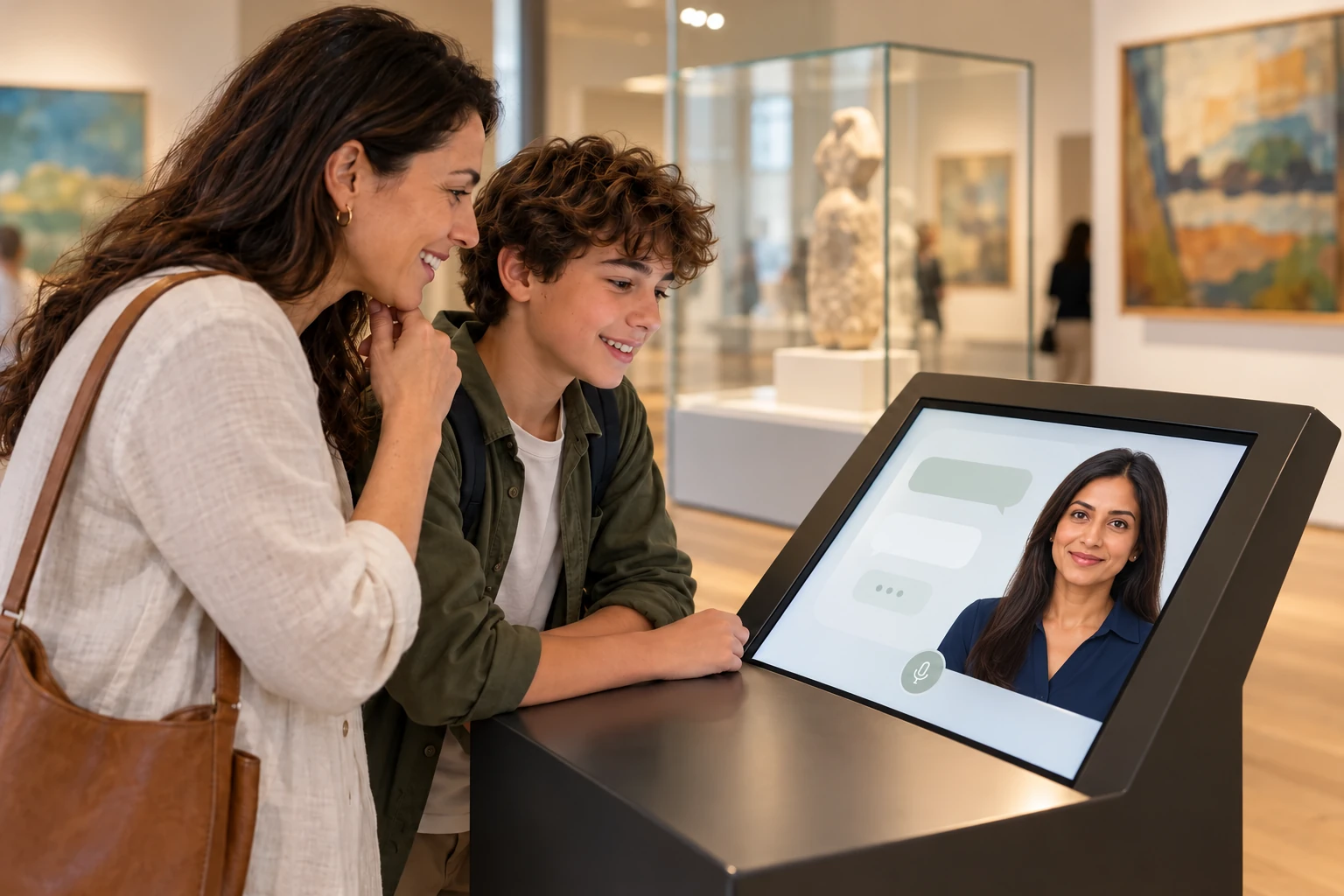
Visitors bring different interests, languages and access needs. Help them explore curator-approved stories through conversation while preserving the authority of cultural contributors.
Use interpretation written or approved by curators and appropriate cultural contributors. Identify gaps rather than inventing stories or provenance.
“Can you tell me more about this exhibit?”
Explain family activities, session times and visitor facilities from current venue content. Refer changing availability to the official booking channel.
“What activities are available for families?”
Provide approved accessibility, assistance and venue-navigation information. Offer alternative formats and a route to a staff member.
“Where can I find accessibility information?”
Suggest related works and themes using the venue’s approved interpretation and visitor pathways.
“What should I look for next in this collection?”
These examples show the kinds of conversations you can design. Content and service pathways are reviewed with your organisation.
“Can you tell me more about this exhibit?”
Share interpretation prepared and reviewed by your venue.
“What activities are available for families?”
Explain visitor programs, opening times and practical details.
“Where can I find accessibility information?”
Guide visitors to facilities, assistance and contact pathways.
“What should I look for next in this collection?”
Suggest related works and themes using the venue’s approved interpretation and visitor pathways.
A simple service journey, with people and trusted information at its centre.
A visitor opens your website or approaches a kiosk, chooses a supported language and sees a clear introduction to the AI assistant.
They ask by voice or text. The assistant can guide the pace and clarify what information they are looking for.
The assistant explains relevant information from your reviewed content and offers the configured link, contact or service pathway.
When the question is personal, outside scope or needs specialist judgement, the agreed route to staff remains clear.
Give each person a space to ask, repeat and explore routine service information. Bring the same reviewed knowledge to more interactions while your team focuses on personal support and specialist judgement.
Capacity, availability, language coverage and integrations depend on the agreed deployment. Review accessibility and user feedback as you expand.

Set a baseline and review agreed measures with staff and users. These are intended outcomes, not guaranteed results.
Ask visitors whether stories are clear, relevant and easy to explore.
Review language options, accessible formats and the ability to reach staff.
Track follow-up questions and exploration of approved collection themes.
Start with a focused trial or configure a product for deployment. Agree responsibilities and success measures before launch.
Choose the audience, service questions and a small set of outcomes. Map where staff should remain involved.
Review the character, language, tone and access needs with staff and representatives of the people you serve.
Review sources, permissions, update responsibilities and the assistant’s limits. Configure agreed channels and integrations.
Test routine questions, uncertainty, language and handover. Launch the agreed scope, gather feedback and refine before scaling.
Discuss your service boundaries and requirements with our team.
Keep contributors and curators involved in content selection, permissions and review. Respect restrictions on sensitive knowledge and agree what the assistant must not discuss.
Yes. Agree the identity, pronunciation, tone and supported languages during setup, then test them with representative users. Availability depends on the selected product and configuration.
You provide the service knowledge and decide its scope. We agree content review, update ownership, response boundaries and how uncertainty is handled.
Agree what information is collected, where it is processed, retention periods and staff-contact routes. Introduce the assistant as AI and let people choose a human channel.
Yes. Choose a small service area, audience and set of measures, then review feedback before expanding. Products can also be configured for deployment when scope is agreed.
Choose a website, kiosk or other supported service channel. Chatbots and phone reception can complement a digital human when they better fit the task.
The assistant should acknowledge uncertainty and follow the agreed referral or contact pathway. Test these cases before launch and review them during operation.
Tell us about your museums & culture use case. Choose a preferred time in the enquiry form, and our team will confirm the session with you.